When faced with the dilemma of whether to repair or replace your AC unit, it’s crucial to weigh various factors to make an informed decision. From cost implications to environmental impact, this guide delves into all aspects to help you navigate this important choice with confidence.
As we delve deeper into the intricacies of AC repair and replacement, you’ll gain valuable insights to guide you towards the most suitable option for your cooling needs.
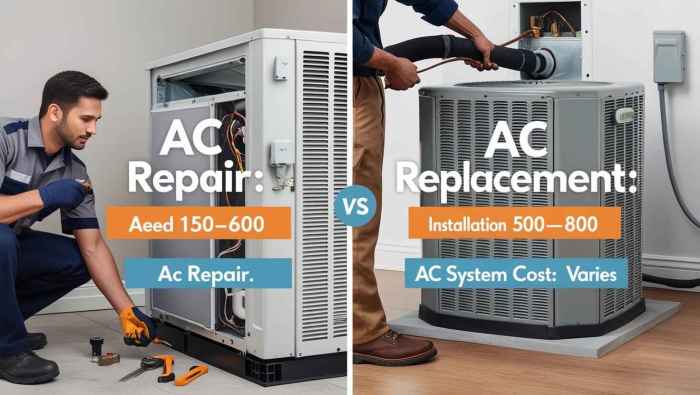
When faced with the decision of whether to repair or replace your AC unit, there are several key factors to take into consideration to make an informed choice.
Repairing an AC unit can sometimes be a more cost-effective solution in the short term, especially if the issue is minor and can be easily fixed. However, if the repair costs start to accumulate or if the unit is older, it might be more financially prudent to opt for a replacement.
Consider the long-term savings and benefits of a new, more energy-efficient unit compared to continued repairs on an older system.
The age of your AC unit plays a significant role in the decision-making process. As AC units age, they are more prone to breakdowns and inefficiencies. If your unit is nearing the end of its expected lifespan (usually around 10-15 years), it might be more beneficial to invest in a new unit rather than pouring money into repairs that may only provide temporary solutions.
Analyzing the energy efficiency of your current AC unit is crucial when deciding whether to repair or replace it. Older units tend to be less energy-efficient, leading to higher utility bills. A new, more energy-efficient unit can not only reduce your energy costs but also provide better cooling performance.
Consider the long-term energy savings and environmental impact when weighing the decision between repairing or replacing your AC unit.
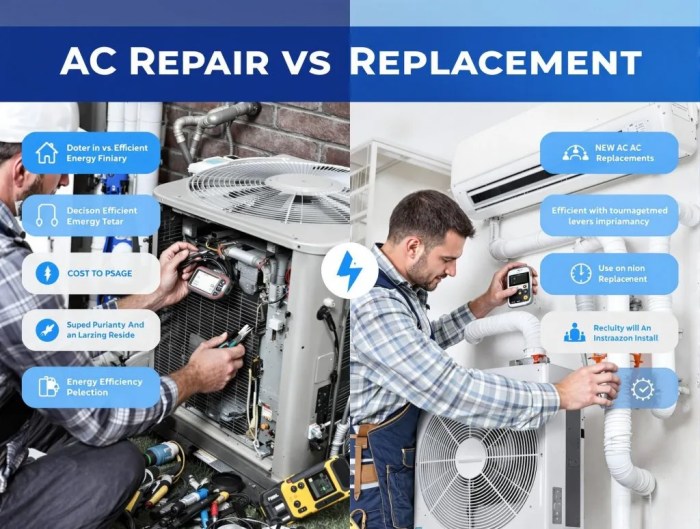
Repairing your AC unit can be a cost-effective solution to common problems. By following a step-by-step guide to troubleshoot issues, you may be able to avoid a full replacement and extend the lifespan of your unit.
Regular maintenance is crucial in prolonging the lifespan of AC components. Here are typical lifespans and when they might need repair or replacement:
Regular maintenance, such as cleaning filters, inspecting components, and scheduling professional tune-ups, can significantly extend the lifespan of your AC unit. This can also improve energy efficiency and reduce the risk of costly repairs.
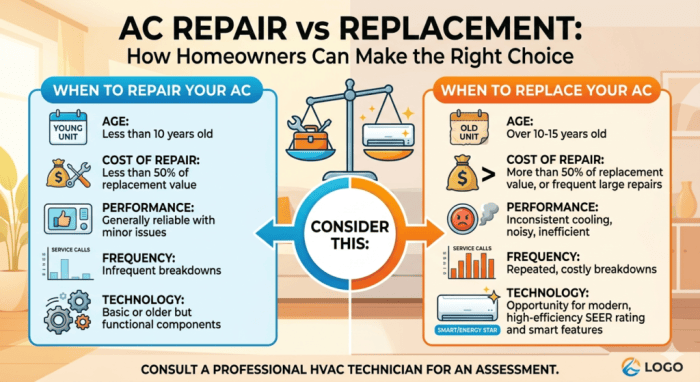
Replacing an AC unit becomes necessary when certain signs indicate that repairing it may not be a cost-effective solution in the long run. Let’s explore the factors that suggest it’s time for a replacement and delve into the options available in the market.
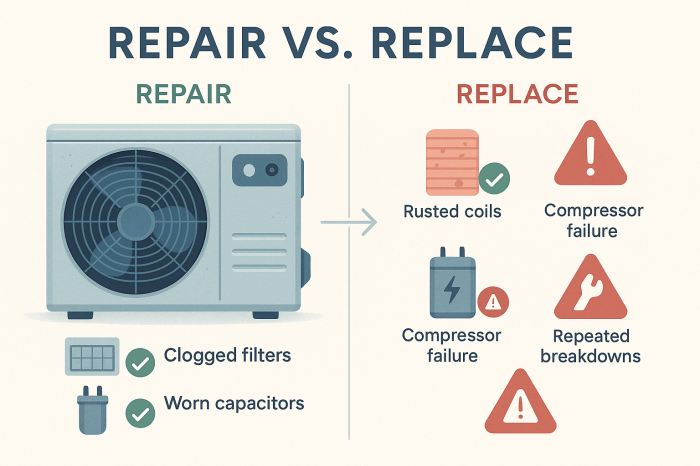
When it comes to repairing or replacing an AC unit, it’s essential to consider the environmental impact of your decision. AC units can have a significant carbon footprint, so making eco-friendly choices is crucial in reducing harm to the environment.
Refrigerants used in AC units can have a damaging effect on the environment. Older units often contain refrigerants like HCFCs or HFCs, which are potent greenhouse gases that contribute to ozone depletion and global warming. When these refrigerants leak into the atmosphere, they can harm the environment and human health.To mitigate these environmental implications, newer AC units use more environmentally friendly refrigerants like R410A or R32.
These refrigerants have a lower impact on the environment and are becoming the standard in modern AC systems. When repairing or replacing your AC unit, opt for models that use these eco-friendly refrigerants to minimize environmental harm.
When considering repairing or replacing your AC unit, look for eco-friendly options that are energy-efficient and use environmentally safe materials. Energy-efficient models can reduce your carbon footprint and lower your energy bills. Additionally, consider investing in smart thermostats or ductless mini-split systems that are more efficient and environmentally friendly.
To minimize the environmental impact of disposing of an old AC unit, it’s essential to follow proper disposal procedures. Old AC units contain refrigerants and other harmful chemicals that can harm the environment if not disposed of correctly. When replacing your AC unit, contact a professional HVAC technician or a recycling center that can safely remove and dispose of the unit’s components.
Make sure to recycle or dispose of the unit following local environmental regulations to prevent pollution and reduce waste.
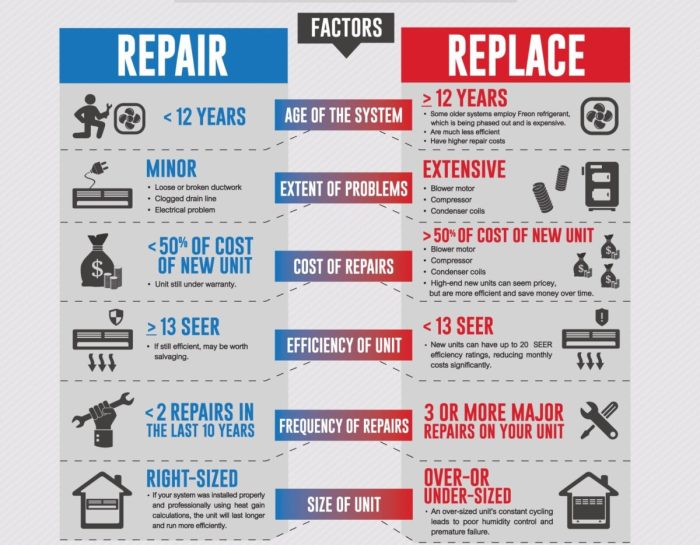
In conclusion, the decision to repair or replace your AC unit is a significant one that requires careful consideration. By understanding the key factors and implications involved, you can make a choice that ensures optimal comfort, efficiency, and sustainability in your home.
When should I consider replacing my AC instead of repairing it?
If your AC unit is more than 10-15 years old, requires frequent repairs, or has major issues like compressor failure, it’s often more cost-effective to replace it.
What are the energy-saving benefits of installing a new AC unit?
New AC units are designed to be more energy-efficient, leading to lower utility bills and reduced environmental impact. They use advanced technologies to cool your home effectively while consuming less electricity.
How do I properly dispose of my old AC unit?
To minimize environmental impact, contact local recycling centers or HVAC companies that offer disposal services. Make sure refrigerants are removed safely by professionals to prevent harm to the environment.